
Introduction
In modern industrial manufacturing, precision, efficiency, and adaptability are the cornerstones of production success. The tube end forming machine stands as a vital piece of tube processing machinery designed to meet these exact demands across the global market. Whether shaping complex components for automotive fluid systems, optimizing heat exchanger production, or fabricating intricate lines for HVAC tube end forming machine applications, this technology delivers unmatched consistency and structural integrity.
As industries push toward higher performance standards, the need for reliable, high-volume production has never been greater. Utilizing a precision cold-forming process, a modern pipe end forming machine alters the shape of tube extremities without compromising material strength. From simple single-hit operations to complex multi-station end forming, our advanced machinery ensures seamless integration into automated production lines, helping global manufacturers reduce cycle times and maximize profitability.
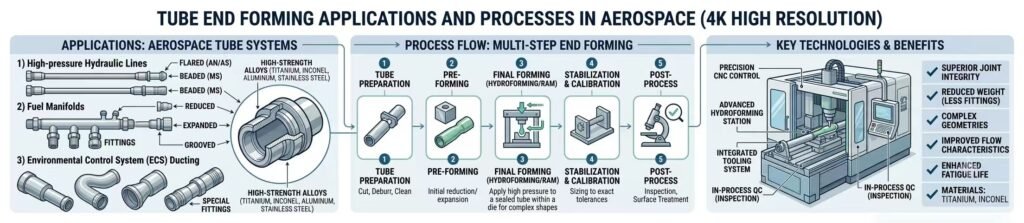
Definition of Tube End Forming
At its core, tube end forming is a precision cold-forming process used to reshape the ends of metal pipes and tubes. Instead of cutting or welding, this process mechanically deforms the material to create specific shapes, joints, or seals.
As a leading developer of tube processing machinery, we design these systems to manipulate tube walls without compromising structural integrity.
Common Applications and Shapes
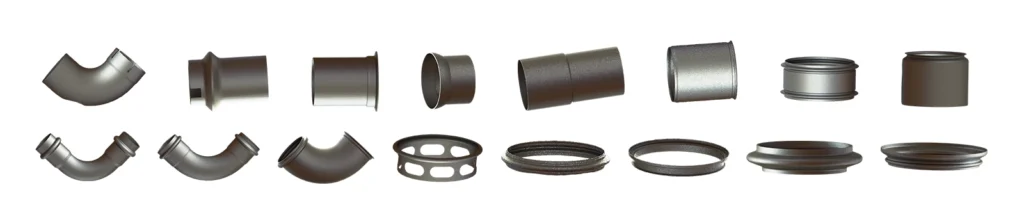
A high-performance tube end forming machine can execute a wide variety of geometries depending on your production needs:
- Tube Expanding and Reducing: Changing the diameter to allow tubes to slip-fit together.
- Pipe Flaring and Beading: Creating raised ridges or flared edges, critical for securing connections in automotive fluid systems and heat exchanger production.
- Slotting and Notching: Prepping profiles for structural interlocking.
Production Methods
To handle these shapes efficiently, our equipment utilizes two primary mechanical methods:
| Method | How It Works | Best Used For |
|---|---|---|
| Ram Forming | A hydraulic or servo punch forces a die straight into the tube end. | Fast, high-volume operations like HVAC tube end forming machine setups. |
| Rotary Forming | Tooling spins around or inside the tube to gradually shape the metal. | Ultra-precise tolerances and complex profiles. |
By utilizing a multi-station end forming approach, our systems can combine these methods into a single automated cycle. This ensures high-speed, repeatable results across any production line.
Future Trends in Tube End Forming Technology
The demand for high-precision, efficient tube end forming machine solutions is shifting rapidly. As global manufacturers look to cut down on waste and speed up production lines, advanced tube processing technologies are moving toward complete automation, smarter controls, and cleaner operation.
Servo-Driven Systems and Precision Controls
Hydraulic systems are no longer the only game in town. The industry is experiencing a massive shift toward a fully servo-driven motion systems approach.
- Higher Accuracy: Electric servos offer precise control over the precision cold-forming process, ensuring identical results across thousands of cycles.
- Energy Efficiency: These systems only draw power when actively moving, significantly lowering electricity bills for large-scale operations.
- Cleaner Workspaces: Eliminating hydraulic oil reduces maintenance overhead and keeps the factory floor cleaner.
Smarter CNC and Multi-Station Processing
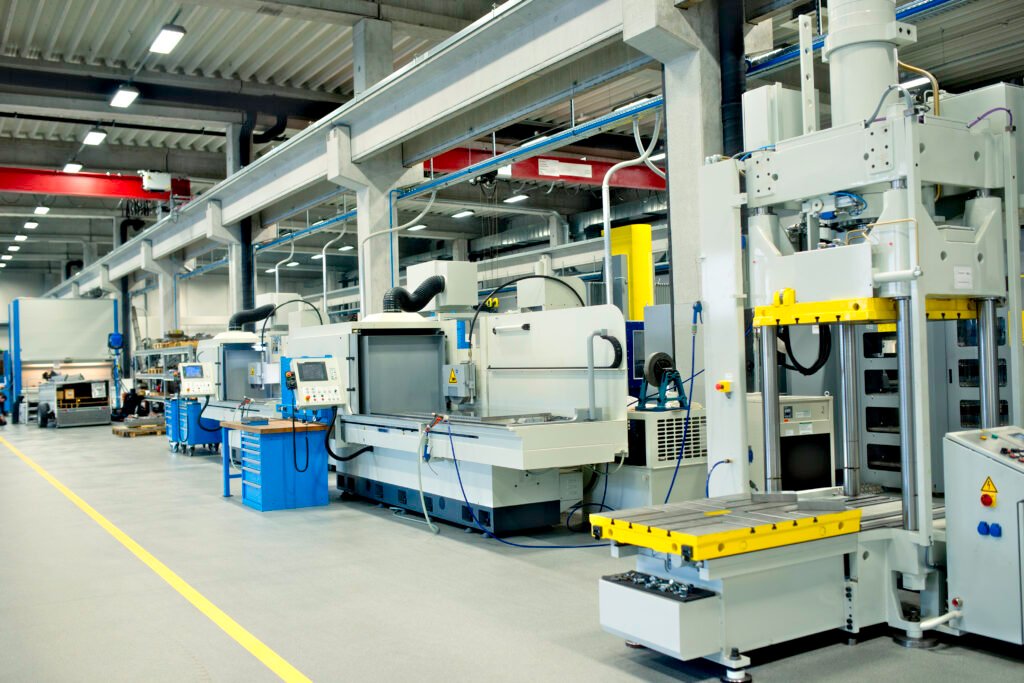
Modern production lines require versatility. The days of dedicated, single-purpose machinery are giving way to the CNC pipe end forming machine and flexible multi-station end forming setups.
| Trend | Market Impact | Key Benefit |
|---|---|---|
| Multi-Station Integration | Combines tube expanding and reducing, pipe flaring and beading into one cycle. | Drops part handling times to zero. |
| IoT & Smart Connectivity | Real-time monitoring of tool wear and machine health. | Prevents unexpected downtime. |
| Rapid Tooling Changes | Quick-lock die designs allow operators to swap sizes in minutes. | Perfect for high-mix, low-volume runs. |
Meeting Global Industry Shifts
Green energy, lightweight automotive fluid systems, and high-efficiency heat exchanger production are driving strict tolerances. Whether it is an HVAC tube end forming machine processing delicate copper coils or an automatic end forming machine shaping stainless steel for EV cooling lines, the future belongs to connected, highly adaptable tube processing machinery. Staying ahead means investing in smarter, faster, and more adaptable forming tech.
Summary
At our core, we deliver high-performance tube end forming machine solutions designed to elevate your manufacturing efficiency. By integrating advanced tube processing technologies, our machinery masters everything from tube expanding and reducing to intricate pipe flaring and beading. We build these systems to meet the rigorous standards of global industries, ensuring seamless integration into automotive fluid systems, heat exchanger production, and high-volume HVAC lines.
Why Global Manufacturers Choose Our Machinery
- Precision and Power: Utilizing a precision cold-forming process, our machines deliver flawless shapes without compromising material integrity.
- High Efficiency: With options ranging from an automatic end forming machine to a multi-station end forming setup, you can complete complex profiles in a single cycle.
- Advanced Control: Our high-end configurations feature servo-driven motion systems and CNC pipe end forming machine technology for unmatched accuracy and quick changeovers.
As a leading tube end forming machine manufacturer in China, we bridge the gap between robust engineering and cost-effective production. We provide the global market with reliable, heavy-duty tube processing machinery that slashes cycle times and maximizes your return on investment.
Frequently Asked Questions (FAQ)
What is a tube end forming machine used for?
A tube end forming machine is specialized industrial equipment designed to reshape the ends of metal pipes and tubes. Manufacturers use these machines to expand, reduce, flare, bead, or thick-wall tube ends so they can be joined tightly with other components. They are essential in industries like automotive fluid systems, HVAC manufacturing, and aerospace.
What materials can an automatic end forming machine process?
An automatic end forming machine can process a wide variety of metals. The most common materials include:
Stainless steel (highly used in automotive exhaust)
Copper and brass (standard for HVAC tube end forming machines and heat exchangers)
Aluminum (popular for lightweight structural and cooling lines)
Carbon steel (used in general structural piping)
What is the difference between a CNC pipe end forming machine and a manual one?
The main differences come down to precision, speed, and automation:
| Feature | Manual / Hydraulic Machine | CNC Pipe End Forming Machine |
|---|---|---|
| Control System | Manual valves or basic foot pedals | Programmable servo-driven motion systems |
| Setup Time | Longer, requires manual tool tracking | Rapid, digital changeovers with saved programs |
| Production Speed | Ideal for low-volume or prototyping | Built for high-speed, multi-station end forming |
| Accuracy | Dependent on operator skill | Sub-millimeter precision every single cycle |
Can one machine handle both tube expanding and reducing?
Yes. Modern tube processing machinery utilizes quick-change tooling and multi-station setups. A single machine can perform tube expanding and reducing, followed by pipe flaring and beading, all within the same automated cycle.
Why should I choose a tube end forming machine manufacturer in China?
Partnering with a reliable tube end forming machine manufacturer in China gives global businesses access to top-tier engineering at a highly competitive price point. We integrate premium components, such as advanced CNC controllers and robust hydraulic systems, ensuring our equipment meets strict international safety and quality standards while optimizing your production ROI.