
Introduction
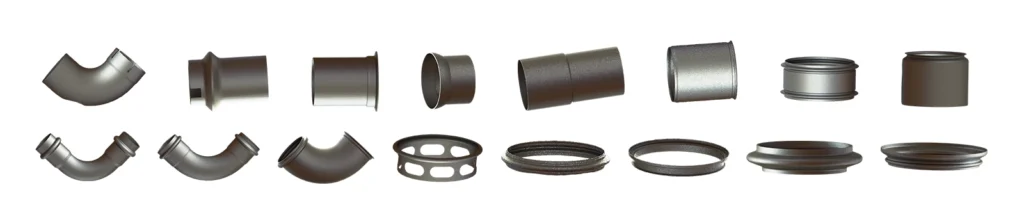
Choosing the right pipe end forming machine is one of the most important decisions for manufacturers working with custom metal tube and pipe fabrication. The right machine can improve forming accuracy, reduce manual labor, shorten cycle times, and help produce stronger, cleaner, and more consistent tube-end profiles.
For industries such as automotive, HVAC, aerospace, construction, furniture, hydraulic systems, and industrial piping, pipe end forming is often required before welding, sealing, assembly, or connection. At May11, we focus on helping manufacturers select practical tube and pipe end forming solutions based on material, tube diameter, wall thickness, production volume, end shape, and automation requirements.
What Is a Pipe End Forming Machine?

A pipe end forming machine is used to reshape the end of a pipe or tube into a specific profile. Common end forming operations include expanding, reducing, flaring, beading, swaging, grooving, and necking.
Instead of leaving the pipe end straight, the machine changes its shape so it can connect with another tube, fit into a component, hold a hose, seal against a fitting, or meet a specific assembly requirement.
Pipe end forming machines are commonly used for:
- Exhaust pipes
- Brake and fuel lines
- HVAC copper tubes
- Hydraulic pipes
- Furniture tubes
- Stainless steel pipe fittings
- Aluminum and carbon steel tube assemblies
A well-selected machine helps manufacturers achieve repeatable forming quality while reducing scrap and rework.
Types of Pipe End Forming Machines
Hydraulic Pipe End Forming Machine
A hydraulic pipe end forming machine uses hydraulic pressure to push tooling into or over the pipe end. It is suitable for heavy-duty applications where strong forming force is required.
This type of machine is commonly used for stainless steel, carbon steel, thick-wall tubes, exhaust pipes, and industrial fluid systems. It is a good choice for manufacturers that need stable force, durable structure, and reliable performance in daily production.
Mechanical Pipe End Forming Machine
Mechanical pipe end forming machines are often used for simpler forming operations or lower-cost production needs. They can be suitable for basic tube expansion, reduction, or sizing tasks where extreme precision or complex multi-step forming is not required.
For small workshops or manufacturers with simple product structures, mechanical machines can be a practical entry-level option.
CNC Pipe End Forming Machine
A CNC pipe end forming machine provides higher control over stroke length, forming speed, tooling sequence, and repeatability. It is ideal for manufacturers that produce complex tube-end shapes or frequently change product specifications.
CNC control is especially useful for automotive, aerospace, HVAC, and hydraulic tube applications where dimensional consistency is important. May11 can provide CNC tube end forming machine solutions for customers who need precise, programmable, and repeatable forming performance.
Rotary Pipe End Forming Machine
Rotary pipe end forming uses rotating tools or rollers to gradually shape the tube end. This method is useful for smooth finishes, complex profiles, and parts that require controlled material flow.
Rotary forming can reduce the risk of cracking or wrinkling, especially when working with certain materials or thicker tube walls.
Manual vs Automatic Pipe End Forming Machines
Manual machines are suitable for small batches, simple shapes, repair work, or prototype production. They require more operator involvement and are usually slower.
Automatic pipe end forming machines are better for high-volume production. They can include automatic loading, clamping, forming, unloading, and integration with other tube processing equipment.
For manufacturers focused on efficiency and labor reduction, an automatic or semi-automatic May11 pipe end forming machine can improve production flow and reduce handling errors.
Advantages and Disadvantages of Pipe End Forming Machines
A pipe end forming machine offers many advantages for custom fabrication.
The main benefits include:
- Better forming accuracy
- Stronger and cleaner tube-end connections
- Faster production speed
- Lower labor cost
- Reduced secondary processing
- Improved consistency between parts
- Better sealing and assembly performance
However, buyers should also consider several limitations. The wrong machine may not have enough forming force, station capacity, tooling flexibility, or automation level. If the machine does not match the tube material, wall thickness, or required end profile, it can cause cracking, thinning, poor sealing, or unstable dimensions.
That is why machine selection should always begin with the actual production requirement, not only the machine price.
Key Considerations When Choosing a Pipe End Forming Machine
When choosing a pipe end forming machine, focus on the following factors.
First, consider the pipe material. Stainless steel requires more forming force than copper or aluminum. Carbon steel, brass, coated steel, and aluminum all behave differently during forming.
Second, check the pipe diameter and wall thickness. Larger diameters and thicker walls require stronger machine structure, higher tonnage, and suitable tooling.
Third, define the end shape. Expanding, reducing, flaring, beading, swaging, and grooving may require different tooling and machine configurations.
Fourth, consider production volume. Low-volume custom jobs may only need a semi-automatic machine, while high-volume automotive or HVAC production may require a CNC or fully automatic pipe end forming machine.
Fifth, review automation needs. If the production line requires fast cycle times, automatic loading, unloading, or connection with a tube cutting or bending machine, the machine should be planned as part of the full tube fabrication process.
How to Choose the Right Pipe End Forming Machine for Custom Fabrication
For custom fabrication, flexibility is often just as important as speed. A machine should be able to handle different pipe sizes, materials, and end profiles without long setup times.
May11 recommends evaluating these points before purchase:
- What material will be formed?
- What is the outside diameter of the pipe or tube?
- What is the wall thickness?
- What end shape is required?
- How many forming steps are needed?
- Is the product low-volume or high-volume?
- Does the machine need CNC control?
- Will it connect with other production equipment?
- Is custom tooling required?
- What tolerance must the finished part meet?
If your parts require multiple forming operations, such as expanding, reducing, and beading on one tube end, a multi-station tube end forming machine may be more efficient than a single-station machine.
If your products change frequently, a CNC pipe end forming machine may help reduce setup time and improve repeatability.
Applications and Suitable Scenarios for Pipe End Forming Machines

Pipe end forming machines are widely used in industrial production.
In the automotive industry, they are used for exhaust pipes, fuel lines, brake lines, air-conditioning tubes, and structural tube assemblies.
In HVAC and refrigeration, pipe end forming machines are used for copper tube expansion, flaring, reducing, and manifold connections.
In hydraulic systems, formed pipe ends are used for high-pressure sealing, hose retention, and fluid transfer.
In construction and metal fabrication, pipe end forming supports handrails, frames, furniture tubes, structural parts, and custom assemblies.
For OEM suppliers and contract manufacturers, a reliable pipe end forming machine can improve production quality and help meet different customer drawings and technical requirements.
How to Set Up and Maintain a Pipe End Forming Machine
Correct setup and maintenance are important for stable forming quality.
Before production, operators should check the tooling, clamping dies, lubrication system, machine alignment, and forming program. The pipe end should be cut cleanly and deburred to reduce cracking and surface defects.
During production, operators should monitor forming pressure, cycle time, tube positioning, and finished part dimensions. If the formed end shows cracks, scratches, uneven shape, or excessive thinning, the machine setup should be adjusted immediately.
Regular maintenance should include:
- Cleaning the forming area
- Checking hydraulic oil or servo systems
- Inspecting tooling wear
- Lubricating moving parts
- Confirming clamping accuracy
- Checking safety guards and sensors
A well-maintained machine can extend tooling life, reduce downtime, and keep production quality consistent.
FAQs
What is the difference between pipe end forming and tube end forming?
In many industrial searches, the terms are used similarly. Pipe end forming and tube end forming both refer to reshaping the end of a metal pipe or tube for connection, sealing, or assembly.
Which machine is better, hydraulic or CNC?
A hydraulic machine is suitable for strong forming force and heavy-duty production. A CNC pipe end forming machine is better for high precision, frequent product changes, and complex forming sequences.
Can one machine perform expanding, reducing, flaring, and beading?
Yes, depending on the machine design and tooling configuration. A multi-station or CNC tube end forming machine can perform several operations in one production cycle.
What information is needed before buying a pipe end forming machine?
You should provide tube material, outside diameter, wall thickness, required end shape, drawing, tolerance, production volume, and automation requirements.
Conclusion
Choosing the right pipe end forming machine depends on material, pipe size, wall thickness, end profile, production volume, and precision requirements. For custom fabrication, the best solution is not always the most expensive machine, but the machine that matches your actual forming process.
May11 provides tube and pipe end forming machine solutions for manufacturers that need stable performance, custom tooling, CNC control, hydraulic forming force, and automatic production options.
If you are planning a new tube or pipe forming project, send May11 your tube drawing, material, diameter, wall thickness, and target production volume. Our team can help recommend the right pipe end forming machine for your application.