
Tube end forming is an important metalworking process used to modify the end of a tube without cutting away a large amount of material. By changing the tube’s diameter, profile, or edge shape, manufacturers can create components that fit securely into assemblies, support reliable connections, and meet demanding design requirements.
Modern tube end forming techniques are widely used in automotive exhaust systems, HVAC equipment, furniture, heat exchangers, construction components, industrial machinery, and many other applications. Depending on the material, tube size, production volume, and required profile, manufacturers may use rotary forming, expanding, reducing, flaring, beading, swaging, or other specialized operations.
A suitable tube end forming machine can improve dimensional accuracy, reduce secondary processing, and provide a more consistent production workflow. This article explains the main advantages of tube end forming techniques and what manufacturers should consider when selecting end forming machines and tube end forming tools.
What Is Tube End Forming?
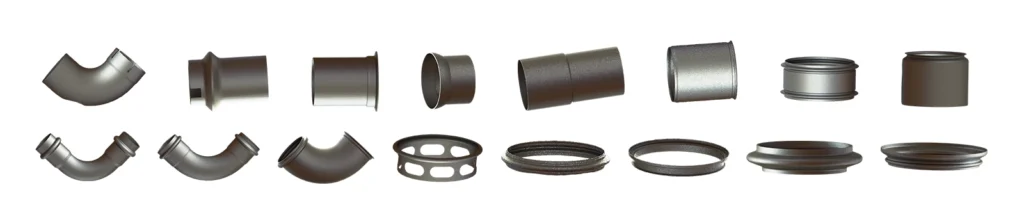
Tube end forming is a manufacturing process that reshapes one or both ends of a tube. The central tube body remains largely unchanged while the end is modified to achieve a specific geometry.
Common tube end forming operations include:
- Expanding the tube end to create a larger opening
- Reducing the diameter for insertion into another component
- Flaring the edge to create a connection surface
- Beading the tube to add a retaining or reinforcement ring
- Swaging the end to produce a tapered or stepped profile
- Forming grooves, collars, and special connection features
Unlike processes that rely primarily on cutting, tube forming uses controlled pressure and tooling to move the material into a new shape. This can preserve more of the tube’s original strength while reducing material waste.
A professional pipe end forming machine or tube forming machine may perform one operation or several operations in sequence. The final configuration depends on the product design and the required production rate.
Improved Dimensional Accuracy
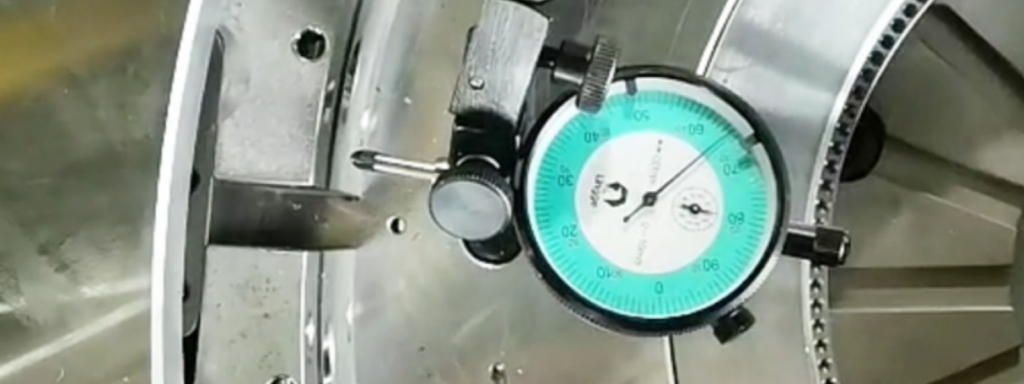
One of the biggest advantages of tube end forming is its ability to produce repeatable dimensions. Manual forming methods can depend heavily on operator skill, resulting in inconsistent diameters, angles, and profiles. Automated end forming machines use controlled movement, pressure, and tooling to produce more uniform results.
Dimensional consistency is especially important when tube components must connect with:
- Flanges
- Hoses
- Fittings
- Clamps
- Other tubes
- Welded assemblies
- Sealing systems
Accurate tube end forming helps manufacturers maintain tighter tolerances and reduce fitting problems during assembly. It can also lower the number of rejected parts caused by uneven or incorrectly shaped tube ends.
For high-volume production, repeatability is often more valuable than the speed of a single manual operation. A stable machine process helps maintain consistent quality throughout an entire production run.
Better Material Utilization
Traditional fabrication may require cutting, welding, or machining additional components to create a functional tube connection. These operations can increase material consumption and generate scrap.
Tube end forming reduces the need for separate pieces in many designs. A single tube can be reshaped to include a collar, bead, flare, or reduced section. This approach can simplify the part structure and reduce the number of components required.
Less material waste may provide several benefits:
- Lower raw material costs
- Fewer welding operations
- Reduced finishing requirements
- Simplified inventory management
- Lower handling and assembly time
The actual savings depend on tube material, wall thickness, profile complexity, and production volume. However, integrating the connection feature directly into the tube often creates a more efficient manufacturing process.
Stronger and More Reliable Connections
A properly formed tube end can improve the strength and reliability of a connection. Beads can help prevent hoses from slipping, while flared ends may create a suitable sealing surface. Reduced or swaged ends can also allow one tube to fit securely inside another.
Because the forming process can preserve the continuity of the tube material, it may avoid some of the weaknesses associated with adding separate welded parts. A well-designed forming operation can support:
- Mechanical retention
- Pressure sealing
- Improved alignment
- Greater resistance to vibration
- More stable joining performance
This is useful in automotive exhaust systems, fluid lines, heat exchangers, and HVAC assemblies, where connections may experience vibration, thermal cycling, pressure, or repeated loading.
The final strength still depends on the material, geometry, wall thickness, forming method, and inspection process. Tube end forming should therefore be designed together with the complete assembly rather than treated as an isolated operation.
Increased Production Efficiency
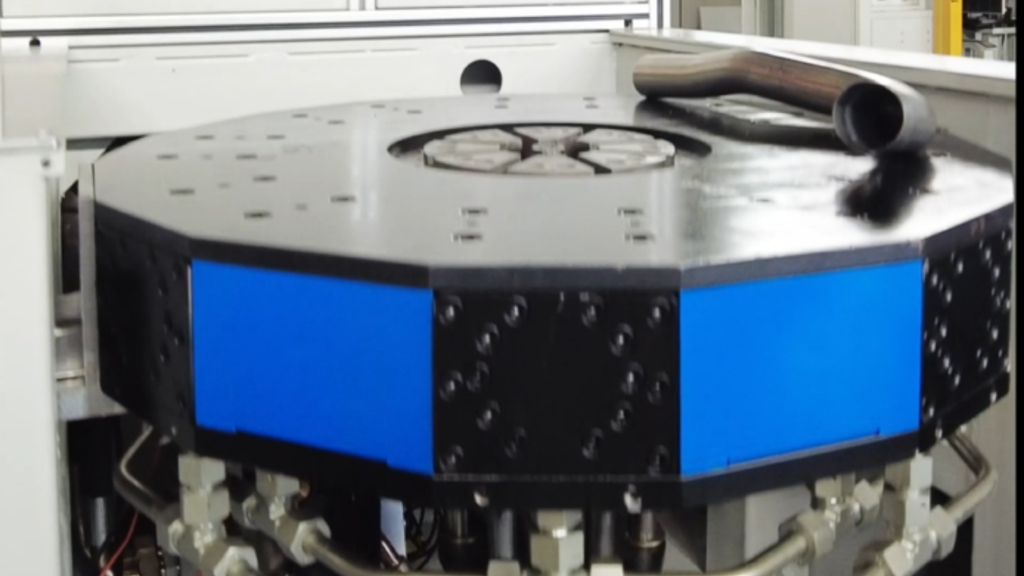
A modern tube end forming machine can combine multiple operations into one controlled process. Instead of moving a workpiece between separate stations for cutting, welding, and machining, a manufacturer may complete several end-forming steps on one machine.
Rotary tube end forming machines are particularly useful when a tube requires gradual, controlled forming. Rotary motion can distribute forming pressure around the tube and reduce sudden deformation. Depending on the machine configuration, rotary forming may support accurate profiles while maintaining a smooth surface finish.
In a production environment, improved efficiency may come from:
- Shorter cycle times
- Fewer manual handling steps
- Reduced setup changes
- More consistent tool positioning
- Easier integration with automated lines
- Lower dependence on repeated manual adjustments
Manufacturers planning to buy rotary tube end forming machines should evaluate cycle time, tooling changeover, control systems, tube range, and compatibility with existing equipment. The fastest machine is not always the most productive choice if setup or maintenance requirements are high.
Lower Labor and Secondary Processing Costs
Manual tube forming often requires skilled operators to measure, position, form, inspect, and correct each part. As production volume increases, labor costs and quality variation can become significant.
Automated end forming machines can reduce repetitive manual work. Operators can focus on loading, unloading, quality checks, tooling changes, and process supervision rather than performing every forming action by hand.
A controlled machine process may also reduce secondary operations such as:
- Additional grinding
- Reworking deformed areas
- Correcting inconsistent diameters
- Welding separate collars
- Removing excessive burrs
- Rechecking every dimension manually
This does not eliminate the need for inspection. Instead, it allows inspection resources to focus on critical dimensions and process verification.
Flexible Tube End Forming Options
Different products require different end profiles. A single machine platform may support several tube end forming techniques by using interchangeable dies, rollers, mandrels, clamps, or other tube end forming tools.
Typical tooling options may be used for:
- Expanding
- Reducing
- Flaring
- Beading
- Grooving
- Swaging
- Special multi-step profiles
Tooling flexibility is important for manufacturers serving several industries or producing multiple product variants. It can also support product development when new tube shapes are introduced.
Before selecting a machine, confirm how quickly tools can be changed and how easily the equipment can be adjusted for different tube diameters, materials, and wall thicknesses. Tool life, availability, maintenance, and replacement cost should also be included in the purchasing decision.
Suitable for Many Materials and Industries
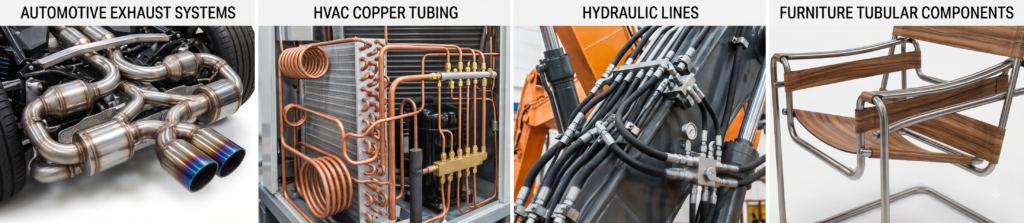
Tube end forming can be applied to a variety of metallic tubes when the material and process parameters are correctly matched. Common materials may include carbon steel, stainless steel, aluminum, copper, and selected alloy materials.
Each material behaves differently during forming. For example, aluminum may require careful control to avoid cracking, while stainless steel may require higher forming force and suitable tooling materials. Lubrication, speed, clamping force, and forming sequence must be selected according to the material and profile.
Tube forming machines are used in industries such as:
- Automotive exhaust manufacturing
- HVAC and refrigeration
- Heat exchanger production
- Construction and architectural products
- Industrial equipment
- Furniture and metal frames
- Agricultural machinery
- Fluid and fuel systems
The right process makes it possible to produce functional tube ends while maintaining the appearance and performance expected in the target application.
Improved Product Appearance
In addition to functional performance, appearance can be important for visible tube components. Poorly controlled manual forming may create wrinkles, dents, uneven edges, or visible tool marks.
A well-configured tube end forming process can produce a cleaner and more uniform finish. This is valuable for furniture frames, architectural components, consumer equipment, and other products where the tube remains visible.
Surface quality depends on several factors, including:
- Tool geometry
- Tool surface condition
- Forming speed
- Lubrication
- Material hardness
- Clamping method
- Number of forming stages
Manufacturers should inspect sample parts before approving a tooling design. A profile that meets dimensional requirements may still require adjustment if the visual finish is unsuitable.
Easier Integration with Automation and Quality Control
Many end forming machine can be integrated into automated production cells. They may work alongside tube cutting machines, bending equipment, robotic loading systems, transfer systems, and inspection devices.
Automation can improve production visibility by supporting:
- Programmable forming sequences
- Digital parameter storage
- Batch traceability
- Sensor-based monitoring
- Automatic part detection
- Consistent machine settings
This is especially useful for manufacturers producing several tube models or serving customers with strict documentation requirements.
When comparing rotary tube end forming machines, review the control interface, communication options, safety functions, and data-recording capabilities. A machine that fits naturally into the existing workflow may provide more long-term value than one with a higher specification but limited integration options.
How to Choose the Right End Forming Machine
The most suitable end forming machine depends on the product and production environment. Before purchasing equipment, consider the following questions:
- What are the tube’s outside diameter, wall thickness, and material?
- Which end forming operations are required?
- Is the profile formed in one stage or several stages?
- What tolerance and surface-finish requirements apply?
- What is the expected daily or monthly production volume?
- How often will tooling need to be changed?
- Does the machine need to connect with cutting, bending, or robotic systems?
- What level of operator training and maintenance support is available?
- Are prototype trials or sample forming tests available?
- Can the supplier provide suitable tooling and after-sales service?
A supplier should be able to explain the forming sequence and identify the correct tools for the material and geometry. Sample testing is recommended before making a final decision, especially for complex profiles or difficult-to-form materials.
Frequently Asked Questions
What is the difference between tube end forming and pipe end forming?
The terms are often used interchangeably, although “tube” may refer to products with tighter dimensional requirements while “pipe” is commonly associated with fluid transport. The correct machine depends on the actual diameter, wall thickness, material, and required end profile.
Are rotary tube end forming machines suitable for high-volume production?
They can be suitable for high-volume production when the machine capacity, tooling design, cycle time, and automation system match the production requirements. A forming trial can help confirm the expected results.
Which tube end forming tools are commonly used?
Common tools include forming dies, rollers, mandrels, expanding tools, reducing tools, flaring tools, and beading tools. The exact configuration depends on the tube profile and material.
How can manufacturers reduce forming defects?
Defects can often be reduced by selecting appropriate tooling, controlling forming speed and pressure, using correct lubrication, supporting the tube properly, and checking material consistency. Regular tool inspection is also important.
Conclusion
Tube end forming techniques offer manufacturers a practical way to create accurate, strong, and repeatable tube connections. Compared with highly manual or multi-stage fabrication methods, forming can reduce material waste, simplify assembly, improve appearance, and increase production efficiency.
Whether the requirement is a simple expanded end or a complex multi-stage profile, the machine and tooling must be selected according to the tube material, geometry, tolerance, and production volume. Manufacturers evaluating a pipe end forming machine or planning to buy rotary tube end forming machines should request technical advice, review sample results, and confirm long-term tooling and service support.
With the right process design, tube end forming can become a reliable part of a modern manufacturing line and support better quality across a wide range of industrial applications.