
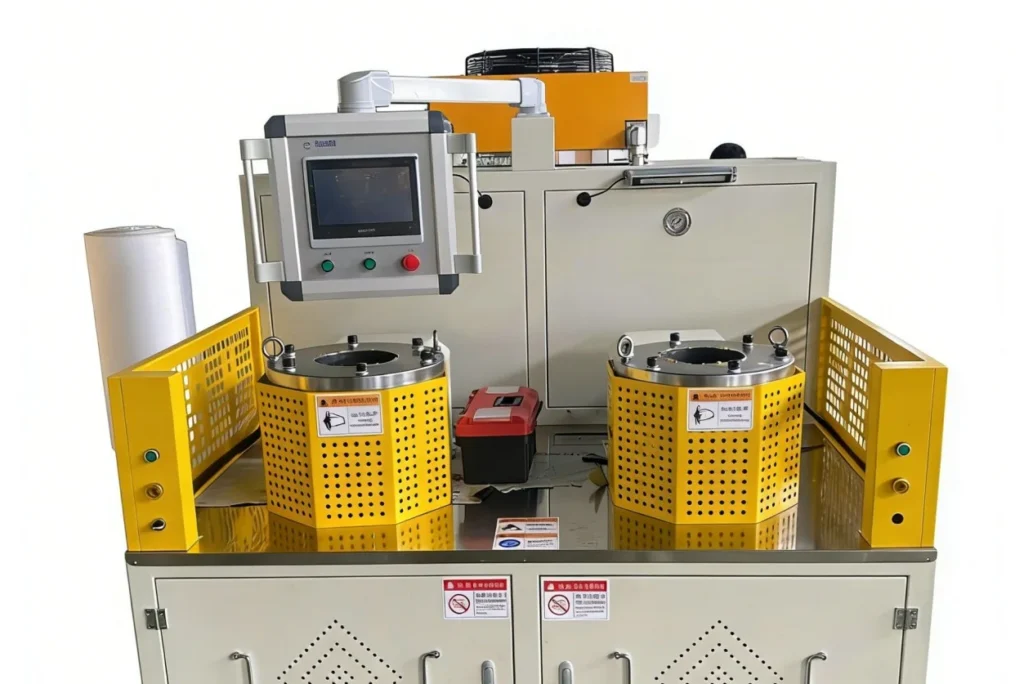
Tube end forming was once treated mainly as a separate process for expanding, reducing, flaring, or beading a tube. Today, automated tube end forming can combine multiple operations, coordinate with bending equipment, and connect with robotic loading, inspection, and production-monitoring systems.
For manufacturers, the value of automation is not simply a faster machine cycle. The larger opportunity is to reduce separate processing steps, control part movement, improve repeatability, and create tube-end features that simplify downstream welding or assembly.
A successful system must still begin with the part. Tube material, outside diameter, wall thickness, end profile, tolerances, production volume, and bending sequence all influence the machine, tooling, and automation design.
At May11, tube end forming projects are evaluated around these production requirements rather than machine specifications alone.
How Automation Changes Tube End Forming
A conventional production route may require several separate machines and manual transfers. Tubes may be cut in one area, formed in another, bent at a different station, and then moved to welding or assembly.
Every transfer creates additional work:
- Operators must load and unload the part.
- Work-in-process inventory increases.
- Part orientation must be maintained.
- Dimensional variation can accumulate.
- Production data becomes more difficult to trace.
- Waiting time grows between operations.
An automated tube end forming system can connect some or all of these steps into a controlled workflow. Depending on the application, the system may include:
- Tube loading
- Straightening
- Cutting
- End facing
- Chamfering
- Expanding
- Reducing
- Beading
- Grooving
- Bending
- Inspection
- Unloading
The correct combination depends on the part. Automation should remove unnecessary handling while preserving access for tooling changes, maintenance, quality checks, and safe recovery from production faults.
For a general introduction to the main forming methods, read how the tube end forming process works.
What a Multistation Tube End Forming Machine Can Do
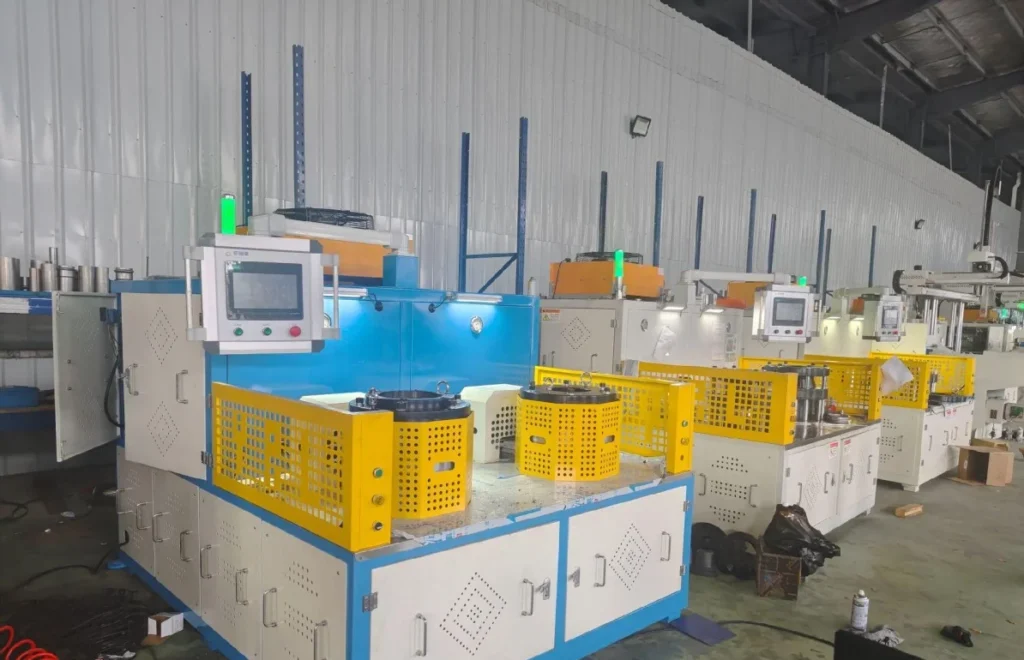
A multistation tube end forming machine allows several tools to work on the same tube in a defined sequence. Instead of transferring the part between separate machines, the system presents the required tools within one controlled work area.
This approach can support complex tube-end profiles that cannot be produced reliably in a single forming movement.
Ram Forming Tools
Ram tools move axially toward the tube end. Depending on the tooling geometry, they can:
- Expand the tube diameter
- Reduce the tube diameter
- Create a flare
- Form a bead
- Produce several stepped diameters
- Prepare a custom connection profile
The tube must be clamped securely during the operation. Clamping force, forming stroke, tool alignment, available tube projection, and material behavior all affect the result.
Ram forming may also be divided into several progressive stages. For example, the first tool can create an initial shape while later tools complete and calibrate the final profile. Progressive forming can reduce the amount of deformation required in one movement.
Rotary Forming and Finishing Tools
Rotary tools can complement ram forming by performing operations such as:
- Chamfering
- End facing
- Rolling
- Grooving
- Surface calibration
- Thread preparation
- Burr removal
These operations may improve tube length consistency or prepare the surface for the next forming stage.
When a tube requires both ram and rotary operations, the tool sequence should be developed around the finished-part drawing and the way the material changes during each step.
Why Multiple Stations Matter
Multiple stations can help manufacturers:
- Combine several operations in one machine
- Reduce manual transfers
- Create more complex end profiles
- Control the order of forming operations
- Improve product changeovers
- Reduce work-in-process inventory
- Integrate inspection or gauging
- Connect end forming with other tube processes
However, more stations do not automatically create a better process. Every station should have a clear purpose. Unnecessary tooling increases cost, setup work, and maintenance without improving the finished part.
Material, Tooling, and Lubrication Must Be Evaluated Together
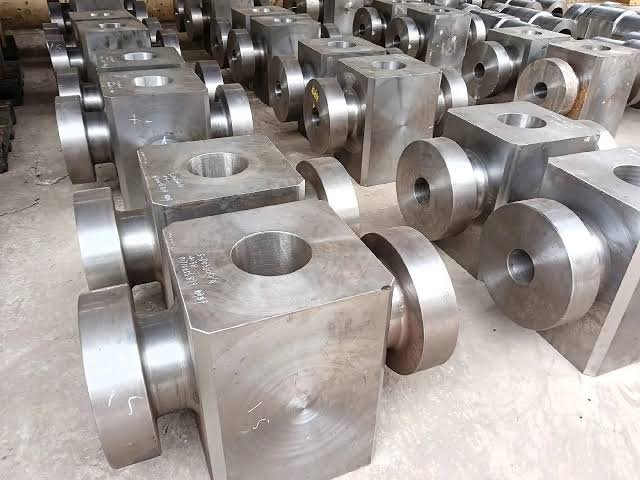
Automated equipment cannot compensate for an unsuitable forming process. The machine, material, tooling, and lubrication must work as one system.
Material Formability
Common tube materials include:
- Carbon steel
- Stainless steel
- Aluminum
- Copper
- Brass
- Other industrial alloys
Each material behaves differently during expansion, reduction, flaring, or beading. Important material properties include strength, hardness, ductility, wall-thickness consistency, seam condition, and surface finish.
A soft aluminum tube may form differently from a higher-strength stainless steel tube even when the dimensions are identical. Material differences can affect:
- Required forming force
- Clamping force
- Springback
- Risk of cracking
- Wrinkling
- Wall thinning
- Surface marks
- Tool wear
Production-representative material should therefore be used during sample trials.
Tooling Design
Tooling directly determines the tube-end geometry. A complete tool set may include:
- Forming punches
- Clamping dies
- Segmented tools
- Rotary tools
- Tube supports
- Mandrels
- Gauges
- Change parts
The tool designer must consider material flow, friction, tube support, forming sequence, and how the finished part will be removed.
Tooling should also be designed for practical production. Operators need safe access, repeatable installation, clear identification, and an efficient changeover procedure.
Surface Treatment and Tool Life
Different materials may require different tool materials, hardness levels, coatings, or surface treatments. The objective is to control friction, reduce galling, protect the tube surface, and maintain the required dimensions over repeated cycles.
Expected tool life should be discussed during the project. It depends on the tube material, forming severity, lubrication, production volume, maintenance, and acceptance criteria.
Lubrication
Lubrication reduces friction and can help control tool wear and surface quality.
The lubrication method may include:
- Spray
- Mist
- Flood application
- Lubricant delivered through the forming tool
- Manual application for lower-volume production
The correct lubricant depends on the material, operation, tooling, and factory requirements. It should support the forming process without creating unacceptable cleaning, environmental, or downstream assembly problems.
Should End Forming Come Before or After Bending?
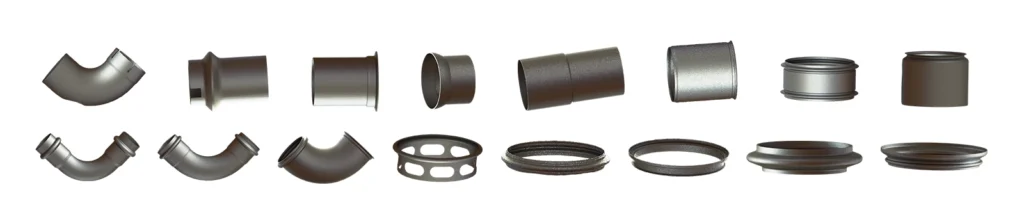
The correct process order depends on the part geometry, available clamping length, bend location, tooling clearance, and dimensional requirements.
There is no universal rule that tube end forming must always happen before or after bending.
When End Forming Before Bending May Work
End forming before bending may be practical when:
- The formed end does not interfere with bending tools.
- Enough straight tube remains for secure clamping.
- The end profile can pass through the bending setup.
- The bending process will not distort the finished end.
- Forming the straight tube simplifies part positioning.
This sequence can be efficient when the part geometry provides enough clearance and the formed feature remains protected throughout the bending cycle.
When End Forming After Bending Is Better
End forming after bending may be necessary when:
- The formed feature is very close to the bend.
- Bending clamps would damage the finished profile.
- The bend changes the final tube length.
- The bent shape is needed to locate the part accurately.
- The process requires final cutting or end facing after bending.
In these applications, the bent tube may be placed into a dedicated clamp that supports its shape. The machine can then trim or face the end before completing the required forming operations.
Why Tube Projection Matters
The amount of tube extending beyond the clamp must remain controlled. This projection affects the forming length and the location of beads, grooves, flares, and other features.
Bending can introduce small length variations. When the final end-form location is critical, an integrated cutting or facing operation may be used before forming.
A sample trial should confirm that the complete process sequence produces repeatable dimensions, not just an acceptable first part.
Designing an Automated Tube Forming Cell
An automated cell should be designed around part flow rather than around individual machines.
The engineering team should define:
- How raw tubes enter the cell
- How each tube is identified
- Which operation comes first
- How the part is transferred
- How orientation is maintained
- Where inspection occurs
- How rejected parts are handled
- How operators access the system
- How tooling changes are completed
- How the cell recovers from a fault
Direct Transfer or Robotic Handling
Some parts can move directly between machines using conveyors or mechanical transfer units. Others require robots because the bent geometry, orientation, or number of operations makes simple transfer difficult.
Robotic handling may be useful when:
- The part must move between bending and end forming.
- Both tube ends require processing.
- Part orientation changes between operations.
- Different product families run in the same cell.
- Inspection or marking is required between processes.
The robot itself does not determine the cell’s productivity. Cycle balance, gripper design, clearance, machine access, and recovery logic are equally important.
Integrating Cutting, Bending, and End Forming
A complete cell may connect:
- Coil feeding
- Straightening
- Cutting
- End forming
- Rotary-draw bending
- Inspection
- Unloading
The order of these operations should follow the part requirements. One product may be formed before bending, while another may need bending followed by cutting, facing, and final end forming.
The cell must also account for tooling limitations. For example, a process that requires an internal bending mandrel may need a different loading and transfer strategy than a simple free-bending application.
Producing Different Batch Sizes
Automation is not limited to one high-volume part. With suitable tooling, controls, and handling, a cell may process several product families.
Flexible production may require:
- Stored machine recipes
- Quick-change tooling
- Tool identification
- Adjustable grippers
- Automatic part detection
- Production scheduling
- Inspection programs
- Controlled access to parameters
The benefit must be compared with the complexity. If product changeovers are rare, a simpler automation arrangement may provide better value.
Concurrent Operations
A balanced cell can perform different operations at the same time. While one machine forms a tube end, a robot may load another part into the bending machine or remove a completed component.
Concurrent operation can reduce idle time, but only when the equipment cycle times, safety zones, and transfer paths are coordinated.
Quality Control in Automated End Forming
Automation improves repeatability only when the process is stable and measurable.
A quality plan should define:
- Critical dimensions
- Inspection frequency
- Approved gauges
- Surface requirements
- Acceptable wall thinning
- Forming length
- Bead or groove location
- Concentricity
- Rejection criteria
- Traceability requirements
Depending on the production line, inspection may be manual, automatic, or a combination of both.
Possible inspection methods include:
- Go/no-go gauges
- Digital measurement
- Vision inspection
- Presence sensors
- Force or position monitoring
- Leak testing
- Sample-based dimensional inspection
The acceptance plan should use measurable limits from the finished-part drawing. Terms such as “high precision” are not sufficient acceptance criteria.
Applications for Automated Tube End Forming
Automated tube end forming is used where manufacturers need repeatable connection, sealing, hose-retention, or assembly features.
Automotive Exhaust and Fluid Systems
Automotive tubes may require expansions, reductions, beads, grooves, and multi-diameter ends for assembly with mufflers, connectors, hoses, and other components.
Automation can combine end forming with cutting, bending, inspection, and part handling.
Learn more about automotive exhaust pipe end forming.
HVAC and Refrigeration
HVAC manufacturers process copper, aluminum, and other tubes for air-conditioning, refrigeration, and heat-transfer equipment.
Typical operations may include:
- Flaring
- Expanding
- Reducing
- Beading
- End calibration
- Connection preparation
Read more about end forming machines in HVAC manufacturing.
Aerospace and Precision Tube Assemblies
Precision tube assemblies may require controlled dimensions, documented inspection, careful material handling, and consistent surface quality.
The automation design should reflect the applicable product and quality requirements rather than relying on a standard machine configuration.
Explore tube end forming for aerospace fuel-line applications.
General Industrial Manufacturing
Other applications include:
- Hydraulic tube assemblies
- Heat exchangers
- Furniture components
- Appliance parts
- Fluid-transfer systems
- Custom fabricated products
In each case, the required end profile and its function in the final assembly should guide the machine and tooling selection.
How to Choose an Automated Tube End Forming System
Before requesting a proposal, prepare a complete technical package.
Provide:
- Tube material and grade
- Outside diameter
- Wall thickness
- Starting length
- Finished-part drawing
- Critical tolerances
- Required end-forming operations
- Bend locations
- Production volume
- Cycle-time target
- Product mix
- Inspection requirements
- Factory utilities
- Automation scope
The supplier should explain how the proposed process addresses every part.
Questions to Ask the Supplier
- Which operations will be completed in the end forming machine?
- How many forming stages are required?
- Should the tube be formed before or after bending?
- Which tooling is included?
- How will product changeovers be handled?
- What sample tests are required?
- How will critical dimensions be inspected?
- Which parts of the cell are automated?
- What happens when the system detects a fault?
- What training, documentation, and spare parts are included?
May11 works with manufacturers to evaluate tube specifications, forming profiles, production targets, tooling, and automation requirements before a machine configuration is confirmed.
The Next Stage of Automated Tube End Forming
Future tube end forming systems will continue to become more connected and flexible.
Control systems may support:
- Recipe management
- Production monitoring
- Alarm history
- Maintenance reminders
- Tool-life tracking
- Motor-temperature monitoring
- Remote diagnostics
- Integration with factory data systems
- Automated inspection results
These functions can support preventive maintenance and production planning, but technology should solve a defined manufacturing problem. More data or more automation does not automatically create a better process.
The strongest system is the one that produces acceptable parts consistently, allows practical maintenance, and supports the factory’s real production mix.
Frequently Asked Questions
What is automated tube end forming?
Automated tube end forming uses controlled machines and material-handling equipment to reshape tube ends with reduced manual intervention. It may combine expanding, reducing, flaring, beading, grooving, cutting, bending, and inspection.
What is a multistation tube end forming machine?
A multistation machine presents several forming or finishing tools within one work area. The tube moves through a defined sequence to create a finished profile that may require more than one operation.
Can tube bending and end forming be automated together?
Yes. The processes can be connected through direct transfer, mechanical handling, or robotics. The correct order depends on the part geometry, bend location, tooling clearance, and dimensional requirements.
Should a tube be end formed before or after bending?
Either sequence may be correct. End forming before bending may simplify workholding for straight tubes, while end forming after bending may protect the finished profile or correct length variation introduced during bending.
Which materials can be processed?
Common materials include carbon steel, stainless steel, aluminum, copper, and brass. The machine, tooling, lubrication, and forming sequence must be matched to the specific material and tube dimensions.
How do I select an automated tube end forming machine?
Begin with the finished-part drawing, tube material, dimensions, tolerances, forming operations, production volume, bending sequence, inspection requirements, and automation scope. Then validate the proposed process through representative sample trials.
Conclusion
Automated tube end forming can do more than reduce manual loading. It can combine multiple forming stages, coordinate with bending and cutting, improve process control, and simplify the production of complex tube assemblies.
The best results come from treating the machine, tooling, material, lubrication, bending sequence, handling, and inspection as one complete process.
For manufacturers planning a new tube-processing project, May11 can evaluate the part specifications, required end profile, production target, and automation needs before recommending a machine and tooling solution.