
If you plan to buy ram tube end forming machines, the best starting point is not the machine price or model number. Start with the tube, the required end profile, and the production target. A machine that looks powerful enough may still be unsuitable if its clamping system, stroke, tooling layout, controls, or loading method does not match your part.
Ram-type machines use a controlled linear forming movement to push a tool into or around the end of a clamped tube. Depending on the tooling, the process can create expanded, reduced, flared, beaded, grooved, or custom-shaped ends. These machines are used where manufacturers need repeatable parts, stable assembly, sealing features, and potentially higher throughput than manual methods when the tooling and process are validated.
Before requesting quotations, review the available ram tube end forming machines and prepare a clear part specification. This guide explains the information a supplier needs, the machine features to compare, the acceptance tests to request, and the questions that help prevent a costly mismatch.
Quick Answer: What Should You Check Before Buying?
When comparing ram tube end forming machines, confirm these ten items:
- Finished tube-end drawing and dimensional tolerances
- Tube material, outside diameter, wall thickness, and starting length
- Required forming operations and number of forming stages
- Machine force, stroke, clamping method, and tooling space
- Tooling design, tool life, and changeover time
- Cycle time, production volume, and loading method
- Controls, recipe storage, inspection, and traceability requirements
- Safety guarding and access for maintenance
- Sample trials and factory acceptance criteria
- Total project cost, training, spare parts, and after-sales support
A technically complete quotation should address these points before a model is recommended. If a quotation is based only on tube diameter, ask for a more detailed technical review.
What Is a Ram Tube End Forming Machine?
A ram tube end forming machine reshapes the end of a metal tube with an axial forming action. The tube is held by a clamping system while a powered ram moves the forming tool through a controlled stroke. The tool geometry and process sequence determine the final profile.
Typical operations include:
- expanding a tube end so it can fit over another component;
- reducing a tube end to fit inside a smaller connection;
- flaring an end to create a sealing or joining surface;
- beading a tube for hose retention;
- grooving or shaping a tube for a seal, lock, or assembly feature;
- producing a custom profile with dedicated tooling.
The machine may use hydraulic or servo-controlled motion, depending on the required force, accuracy, process control, and equipment design. The correct choice depends on the actual part, not on the drive type alone.
For a broader explanation of forming methods and profiles, read how tube end forming works
When Is a Ram-Type Machine the Right Choice?
A ram-type tube end former is a practical option when the part requires an axial forming operation and the tooling can create the target geometry without unacceptable cracking, wrinkling, thinning, or distortion. It is often suitable for repetitive production of connection features, sealing profiles, and assembly ends.
It may be a strong fit when:
- the finished end can be produced in one or more axial forming stages;
- the tube must be clamped securely during forming;
- consistent dimensions are important for downstream welding or assembly;
- multiple part numbers require repeatable recipe and tooling changes;
- manual forming no longer meets output or quality targets;
- the machine must connect with feeding, inspection, or unloading equipment.
However, no process should be selected from a product photo alone. Complex geometry, sensitive materials, very tight tolerances, or visible cosmetic surfaces may require sample trials or a different forming method. Send the supplier both the starting-tube specification and the finished-part drawing.
You can also review common tube end forming applications before defining your process.
Information to Send a Machine Supplier
The quality of a quotation depends on the quality of the input data. Give every supplier the same technical package so you can compare proposals on equal terms.
| Required information | What to provide | Why it matters |
| Tube material | Grade and condition | Affects forming force and risk of splitting or springback |
| Tube dimensions | Outside diameter, wall thickness, and length | Determines clamping, tooling, and machine envelope |
| Starting part | Drawing, photo, or physical sample | Confirms the condition before forming |
| Finished profile | Dimensioned drawing and critical tolerances | Defines tooling geometry and acceptance criteria |
| Forming operations | Expand, reduce, flare, bead, groove, or custom form | Determines process sequence and station needs |
| Production target | Parts per hour, shifts per day, and annual volume | Guides cycle time and automation decisions |
| Part variation | Number of tube sizes and profiles | Affects changeover, recipes, and tooling quantity |
| Quality checks | Gauges, inspection method, and traceability | Defines control and data requirements |
| Factory conditions | Power, floor space, air supply, and local standards | Prevents installation problems |
| Automation scope | Manual, semi-automatic, or integrated line | Defines loading, unloading, and communication needs |
Include several representative parts if the machine will run a product family. The largest tube is not always the most difficult part; a smaller tube with a severe reduction, short clamping length, or tight cosmetic requirement may be more challenging.
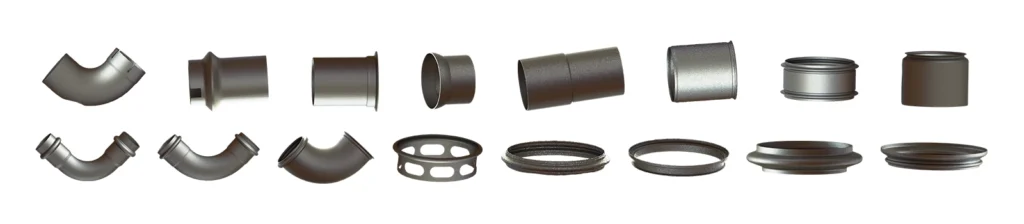
10 Factors to Compare Before You Buy
1. Confirm the Finished Part, Not Just the Tube Size
Two parts made from the same tube can require very different equipment. An expanded joint, a hose-retention bead, and a multi-diameter reduced end place different demands on the machine and tooling.
Mark critical dimensions on the finished drawing. Identify which surfaces seal, fit, weld, or remain visible. This helps the supplier focus on the features that control process capability.
2. Verify Material, Diameter, and Wall-Thickness Range
Do not accept a general statement such as “suitable for steel tubes.” Provide the exact grade, outside diameter, wall thickness, and material condition. Stainless steel, carbon steel, aluminum, and copper behave differently during forming.
Ask the supplier to state the evaluated range in the proposal and identify any parts that still require trials. This makes later technical discussions much clearer.
3. Evaluate Forming Force, Stroke, and Clamping
The machine needs enough forming capacity, but oversizing alone does not guarantee a good part. Stroke control, clamping stability, tube support, tool alignment, and process sequence are equally important.
Ask how the supplier calculated or validated the required capacity. For a new or difficult profile, a sample test is more useful than a theoretical claim.
4. Treat Tooling as Part of the Machine
The forming dies, punches, clamps, and supports directly determine part quality. A low machine price can become expensive if tooling is difficult to adjust, wears quickly, or takes too long to change.
Compare:
- included tooling and spare wear parts;
- tool material and surface treatment;
- expected tool life under the proposed application;
- tool-change procedure and typical changeover time;
- adjustment method for critical dimensions;
- ownership of tooling drawings and replacement availability.
Request a separate tooling list when multiple parts are included in the project.
Words such as “high precision” are not acceptance criteria. Agree on the dimensions to measure, the gauges to use, the sample size, and the acceptable result.
5. Define Accuracy and Repeatability with Measurable Criteria
For example, the acceptance document can identify the formed outside diameter, overall formed length, bead location, surface condition, and pass rate. The exact criteria should come from your assembly and quality requirements.
6. Check Cycle Time Under Real Conditions
A quoted machine stroke time is not the same as complete production cycle time. Include loading, clamping, forming stages, unloading, inspection, and operator movement.
Ask for the demonstrated cycle time using your part or a technically representative sample. If your production mix includes frequent changeovers, measure changeover time as well.
7. Match Controls to Your Production System
The required control level depends on the factory. A single-part workstation may need simple operation and reliable parameter protection. A high-mix line may benefit from recipe storage, tool identification, production counters, alarm history, and restricted access levels.
If the machine will join an automated line, specify the required signals or communications early. Retrofitting interfaces after delivery can delay installation.
8. Review Loading, Safety, and Maintenance Access
Loading height, part length, guarding, and operator reach affect daily usability. Ask for a layout drawing and confirm how the operator loads long or awkward tubes.
Also review access to clamps, tools, hydraulic components, sensors, and lubrication points. Routine maintenance should not require unnecessary disassembly. Safety requirements must be agreed according to the machine’s destination and the buyer’s factory standards.
9. Require Sample Trials and a Factory Acceptance Test

For a custom machine, new part, or demanding profile, sample trials reduce risk. Supply production-representative material because differences in grade, hardness, seam condition, or wall thickness can change the result.
A factory acceptance test should define:
- the exact material and part drawing;
- the number of consecutive parts to run;
- critical dimensions and inspection method;
- required cycle time;
- surface and defect criteria;
- tooling change or recipe test, if applicable;
- documents, training, and spare parts to verify before shipment.
Record approved settings and keep accepted samples as references.
10. Compare Total Project Cost and Supplier Support
The purchase price is only one part of the investment. Compare tooling, change parts, installation, training, freight, electrical requirements, consumables, spare parts, maintenance, and expected support response.
The lowest quotation may not provide the lowest cost per accepted part. A useful comparison considers output, scrap risk, labor, changeover time, serviceability, and the expected working life of the tooling and machine.
Manual, Semi-Automatic, or Automated?
Choose the automation level from the real production requirement rather than from a general preference.
| Configuration | Best suited to | Main points to confirm |
| Manual loading | Lower volume, flexible part mix, or offline production | Ergonomics, guarding, operator consistency, and changeover |
| Semi-automatic | Repetitive production with an operator loading or unloading | Cycle control, part detection, and balanced operator work |
| Automated cell or line | High output or integration with upstream/downstream processes | Feeding, orientation, inspection, rejection, communication, and recovery from faults |
Automation can reduce handling, but it also increases project scope. If the volume does not justify a fully automated line, a well-designed semi-automatic machine may provide a better balance of output, flexibility, and investment.
May11 Models to Evaluate for Your Parts
May11 offers multiple tube end forming machine models. Do not select a model from its name alone. Use your technical package and sample trials to confirm the suitable machine, tooling, and process.
- Review the May11 Tube End Forming Machine 180.
- Review the May11 Tube End Forming Machine 280.
- Review the May11 Tube End Forming Machine 480.
When requesting a recommendation, send the same drawings, material details, production target, and acceptance requirements for every part. May11 can then evaluate the application and identify which model should proceed to technical confirmation.
Common Applications
Ram tube end forming machines can support a wide range of products when the machine and tooling are matched to the application.
Automotive Exhaust Components
Exhaust tubes may require expansions, reductions, beads, or joining profiles for assembly with mufflers, connectors, and other exhaust components.
Learn more about an automotive exhaust pipe end forming machine.
HVAC and Refrigeration Tubes
Copper and aluminum tubes used in HVAC equipment may need expanded, reduced, or flared ends for reliable assembly and fluid connections.
Aerospace and Precision Tube Assemblies
Precision tube assemblies can require controlled profiles and documented inspection. Material handling, surface condition, tooling, and acceptance methods should be reviewed carefully.
General Industrial Tube Products
Ram end forming is also used for furniture, fluid lines, appliance parts, heat exchangers, hydraulic assemblies, and custom fabricated products. In every case, the correct process begins with the finished profile and its function in the final assembly.
Questions to Ask Before Placing an Order
Use this checklist during technical and commercial discussions:
- Have you reviewed every part drawing and material specification?
- Which machine model and forming sequence do you recommend, and why?
- Which parts require sample trials before final confirmation?
- What tooling, clamps, supports, and change parts are included?
- What cycle time has been demonstrated with a representative part?
- How will critical dimensions be adjusted and inspected?
- What are the electrical, hydraulic, pneumatic, and floor-space requirements?
- Which safety features and compliance documents are included?
- What training, manuals, spare parts, and remote support are supplied?
- What are the factory acceptance and final payment conditions?
Put the agreed answers into the technical specification or purchase contract. This protects both buyer and supplier by making the project scope measurable.
Frequently Asked Questions
How much does a ram tube end forming machine cost?
The price depends on forming capacity, tube range, number of stages, tooling, controls, loading method, automation, safety requirements, and inspection scope. Send complete part and production information to receive a meaningful quotation.
Can one machine form different tube sizes?
Often, yes, but each tube size or profile may require dedicated tooling, clamps, supports, recipes, or change parts. The supplier should confirm the complete part family and expected changeover procedure.
Should I choose a hydraulic or servo machine?
The better choice depends on forming force, motion control, accuracy, cycle requirements, maintenance preferences, and project budget. Evaluate the demonstrated result on your part rather than choosing only by drive type.
Why is a sample trial important?
A trial shows how the actual material behaves during forming and helps verify the proposed machine, tooling, process sequence, dimensions, surface quality, and cycle time before shipment.
What defects should be checked during acceptance?
Check for cracking, wrinkling, excessive thinning, surface damage, poor symmetry, incorrect formed length, and dimensions outside tolerance. The specific inspection points should match the part’s function and drawing.
What should I send to get a quotation?
Send the starting-tube and finished-part drawings, material grade, outside diameter, wall thickness, forming operations, tolerance requirements, production volume, cycle target, part samples if available, and required automation level.
Buy the Machine Around the Part
A lower-risk way to buy ram tube end forming machines is to work backward from the accepted finished part. Define the tube, end profile, tolerances, output, inspection method, and factory conditions first. Then compare machine capacity, tooling, controls, automation, acceptance testing, and support against the same specification.
May11 supplies tube end forming solutions for industrial manufacturers. Send your drawings, material information, tube sizes, production target, and sample parts for a technical review before selecting a machine.